

Continuous vs. triggered EEG capture: a data-quality pattern
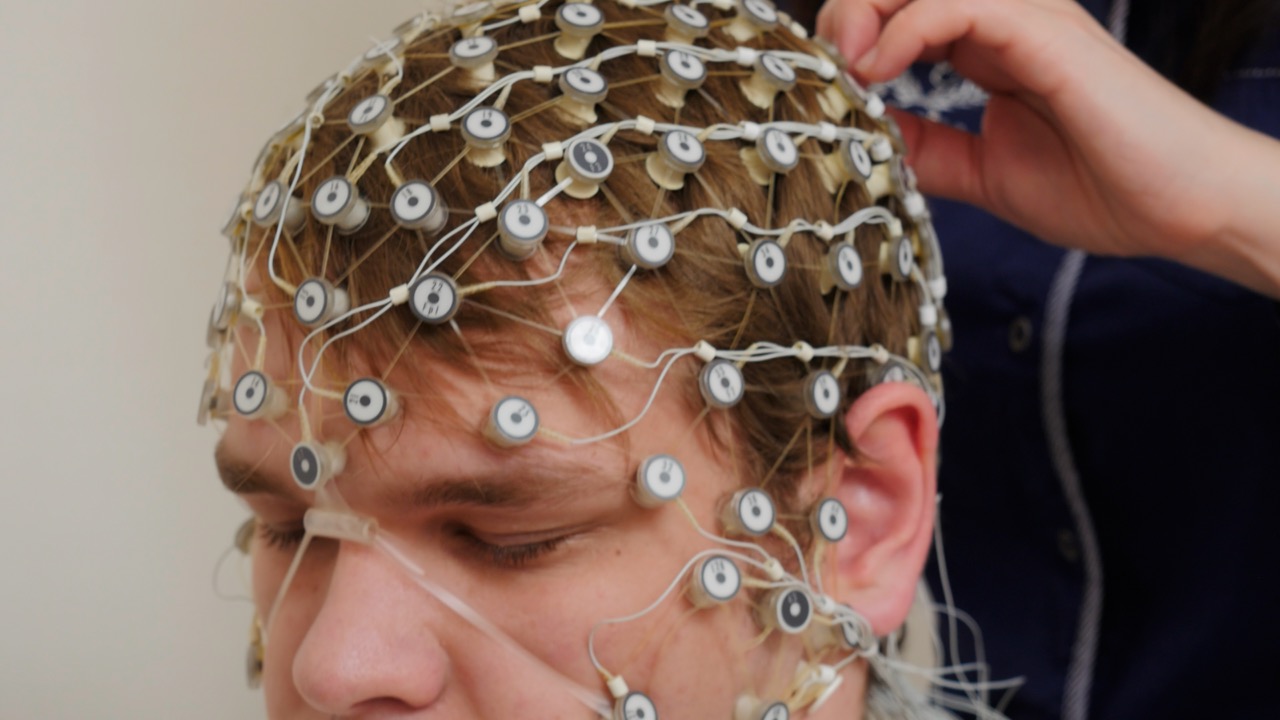
The case for always-on EEG. Recording only around events of interest feels efficient, but in EEG it quietly degrades data quality. Pre-onset baselines, slow cortical drifts, and the activity that builds before a marker are exactly what most analyses depend on. Below, we walk through why continuous acquisition with event tagging is the safer default, when triggered capture is still defensible, and how to get the benefits of both without doubling your storage budget.
What Triggered Capture Discards
Triggered systems begin writing samples when a condition fires — a stimulus, a button press, a detected spike. Everything before that window is gone. But neural responses don't begin at the marker; they build from a baseline that started milliseconds to seconds earlier. Without that baseline you can't normalize, you can't measure pre-stimulus state, and you can't separate signal from drift. The data looks clean and is quietly unusable for half the analyses you'll want to run later.
"If you didn't record the baseline, you didn't record the response." — Qusp Signal Quality Team
Why Continuous Acquisition Wins
- Nothing lost at capture: Every sample from electrode-on to electrode-off is preserved, so no analysis is ever blocked by data you didn't think to keep.
- Decisions move downstream: Epoch windows, baselines, and rejection thresholds are set at analysis time and can be revised as often as the science requires.
- Reusable datasets: The same continuous recording supports an ERP study today and a time-frequency or connectivity reanalysis years later.
- Better artifact handling: Seeing the full context around an artifact makes it far easier to decide whether to repair, interpolate, or reject the affected segment.
Tagging Without Bloating Storage
Continuous recording keeps every sample from electrode-on to electrode-off, then tags events as metadata layered on top of the stream. Nothing is discarded at capture time, so decisions about epoch windows, baselines, and artifact rejection move to analysis time — where you can revise them as often as you need. The same recording supports an ERP study today and a time-frequency reanalysis next year.
The usual objection to always-on capture is storage. In practice, modern compression and sensible sampling rates make a full session far cheaper than the cost of a re-run, and event markers add almost nothing. Qusp writes a continuous stream with an indexed event track, so you can pull only the epochs you need for a given analysis without ever having lost the surrounding context.
When Triggered Capture Still Makes Sense
There are real cases for triggered capture: very long ambulatory monitoring with tight power budgets, or closed-loop paradigms where only post-trigger windows are ever analyzed. Even then, the safer pattern is continuous capture with triggered extraction — record everything, but automatically surface and flag the windows around each event so reviewers see them first.
Treat capture and analysis as separate problems. Capture continuously, tag richly, and decide how to slice the data downstream. Pre-onset activity, baseline correction, and post-hoc reanalysis all stay on the table, and your dataset stays useful long after the original study question is answered.
Final Thoughts
Continuous-with-tagging isn't more work — it's less risk. You stop making irreversible decisions at the moment of recording, and you give every future analysis the context it needs. In EEG, the cheapest data-quality insurance you can buy is simply not throwing data away.