

Neurofeedback Clinic
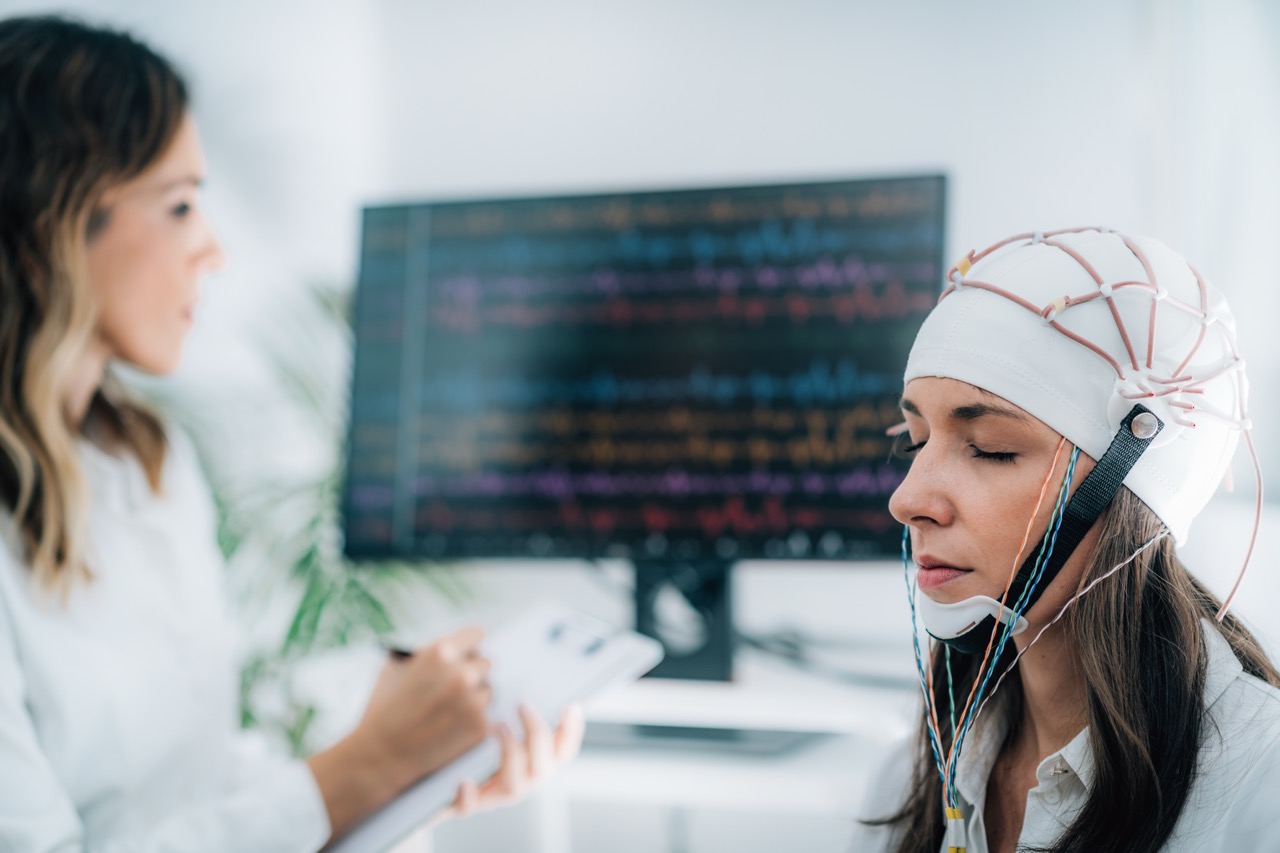
Neurofeedback only works if the signal driving it is clean and the loop is fast. A drifting electrode or a noisy channel doesn't just degrade the data — it actively trains the patient on an artifact. And across weeks of sessions, progress is invisible unless every session is recorded the same way and tracked over time.
This use case shows how a neurofeedback clinic runs real-time protocols on Qusp, with live signal-quality checks that protect every session and per-patient tracking that turns a course of treatment into a visible trajectory.
The setup
Each room runs a chosen protocol against a clean, validated signal. Qusp checks signal quality live so a session never trains on a bad channel, computes the feedback in real time, and logs every session to the patient's record so progress is tracked automatically rather than reconstructed from notes.
The deployment has four parts:
- Protocol library — A set of standardized neurofeedback protocols any clinician can select per patient, with consistent parameters across rooms.
- Live signal-quality checks — Impedance and artifact monitoring run continuously, so feedback pauses rather than rewarding noise.
- Real-time feedback — The feedback signal is computed on a low-latency stream, so the patient's response stays tightly coupled to their brain activity.
- Per-patient tracking — Every session logs to the patient record, building a session-over-session view of progress.
How a typical session runs
The clinician selects the patient's protocol and starts the session. Setup parameters are already defined by the protocol, so the room is consistent from one visit to the next and one clinician to another.
Before and during the session, Qusp checks signal quality. If a channel drifts or an artifact spikes, feedback pauses rather than rewarding the noise — so the patient never trains on a bad signal.
The feedback runs on a low-latency stream, keeping the loop responsive enough that the patient stays engaged and the training stays meaningful. The full session is recorded alongside the feedback.
At the end, the session is logged to the patient's record with its metrics, and the clinician sees how it compares to prior sessions — progress, plateaus, or regressions — at a glance.
What every session captures
Each session records to the same specification:
- 19-channel montage — A standard 10-20 montage, so protocols and progress are comparable across patients and sessions.
- Quality log — A continuous record of signal quality, so any session affected by noise is flagged rather than silently counted.
- Session metrics — Per-session outcomes stored to the patient record, building a longitudinal view automatically.
Compare that to running feedback off a raw signal with quality checked by eye and progress tracked in a spreadsheet. A bad channel can train the wrong thing for a whole session, and progress is only as reliable as someone's notes. Automating quality and tracking removes both risks.
The outcomes
A clinic running this pattern typically sees:
- Cleaner training — Feedback pauses on bad signal, so patients never train on artifacts.
- Consistent protocols — Standardized parameters mean a protocol runs the same in every room, every visit.
- Visible progress — Per-patient tracking turns a course of sessions into a clear trajectory clinicians can act on.
- Less admin — Sessions log themselves to the record instead of being transcribed from notes.
- Comparable outcomes — A shared montage and metrics make results comparable across patients and clinicians.
Where it doesn't fit
This pattern fits protocol-driven neurofeedback and biofeedback practice. Three caveats are worth naming.
First, it supports clinical judgment; it doesn't make clinical decisions. Protocol selection and interpretation remain the clinician's responsibility.
Second, highly bespoke or experimental protocols. The value comes from standardization; constantly changing parameters undercuts comparability across sessions.
Third, it's not a medical-claim engine. Qusp records, monitors, and tracks; clinical efficacy depends on the protocol and the practitioner, not the platform.
Standing it up
Most clinics get this running in a couple of weeks. The first step is loading the protocol library and standardizing montage and parameters. The second is configuring live quality thresholds for the clinic's caps and rooms. The third is connecting per-patient tracking to the record system staff already use.
The clinicians who run sessions should own the configuration. They know which protocols and signal-quality thresholds fit their patients, and that judgment is what keeps the automation clinically useful.
Bring this to your clinic
If you run a neurofeedback or biofeedback practice, Qusp can give you standardized protocols, live signal-quality protection, and automatic per-patient tracking. Talk to our team about loading your protocols, setting quality thresholds, and connecting your patient records.